
A popular Google search phrase is: Why is my Lawn Turning Brown? Maybe it has big, brown, dying areas like this:
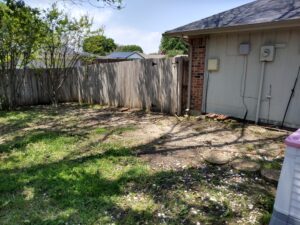
Well, turfgrass does not die of old age. And barring your neighbor having a vendetta against you and coming out in the middle of the night to spray Roundup on your lawn, there are only four reasons why a lawn turns brown, gets thin, or the grass dying in Central and North Texas. Pro Tip: Texas lawns don't die in big sections (like above) solely due to a lack of fertilizer, and it won't be fixed by standalone soil testing.
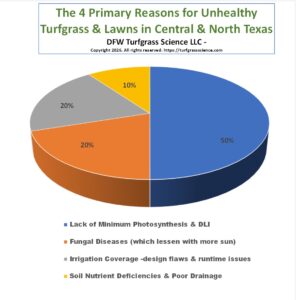
So before buying some cheap Bermuda, Zoysia, or St. Augustine sod and throwing it down on top of your already dead grass stubble, of which I have seen hundreds (literally) of impatient homeowners do, you need to fix the root cause of the problem; of which the root cause of the problem is usually a combination of 2-4 of the turfgrass problems listed in the pie graph:
- Lack of Photosynthesis
- 7 Different Types of Funguses and Diseases in North Texas
- Irrigation Coverage & Runtime Issues
- Soil Nutrient Deficiencies & Poor Drainage
Everyone has heard the old saying, "You can't see the forest because of the trees." And while we believe strongly in soil testing services (which would be like diving into the tree roots at this stage in problem evaluation), you need a certified turfgrass specialist or lawn consultant to give you a 30,000 ft view of the forest before diving down into the deep details of what you think the problems might be.
Pro Tip - throwing down new sod on top of diseased soil and grass stubble is like putting lipstick on a dead pig. Diagnose the root cause of the problem first, then have sod installed.
If you cannot figure out why the lawn turning brown or why the grass is dying, please visit our Contact Us page to schedule an appointment: Contact - DFW Turfgrass Science LLC.

